
CIEN
Cliente
Escuela Superior de Diseño de La Rioja
Dirección de arte y diseño editorial
Casao–Terrazas
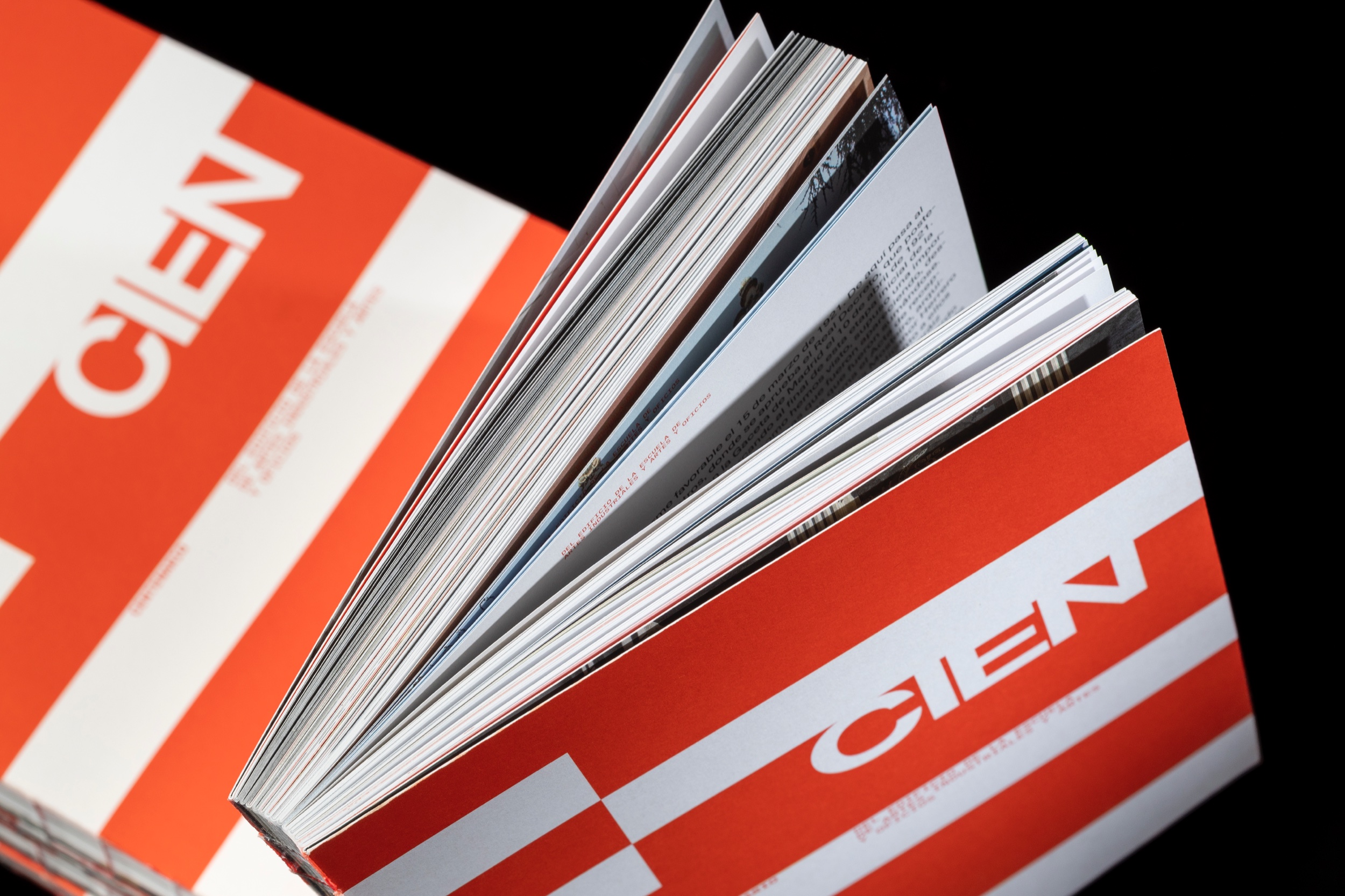
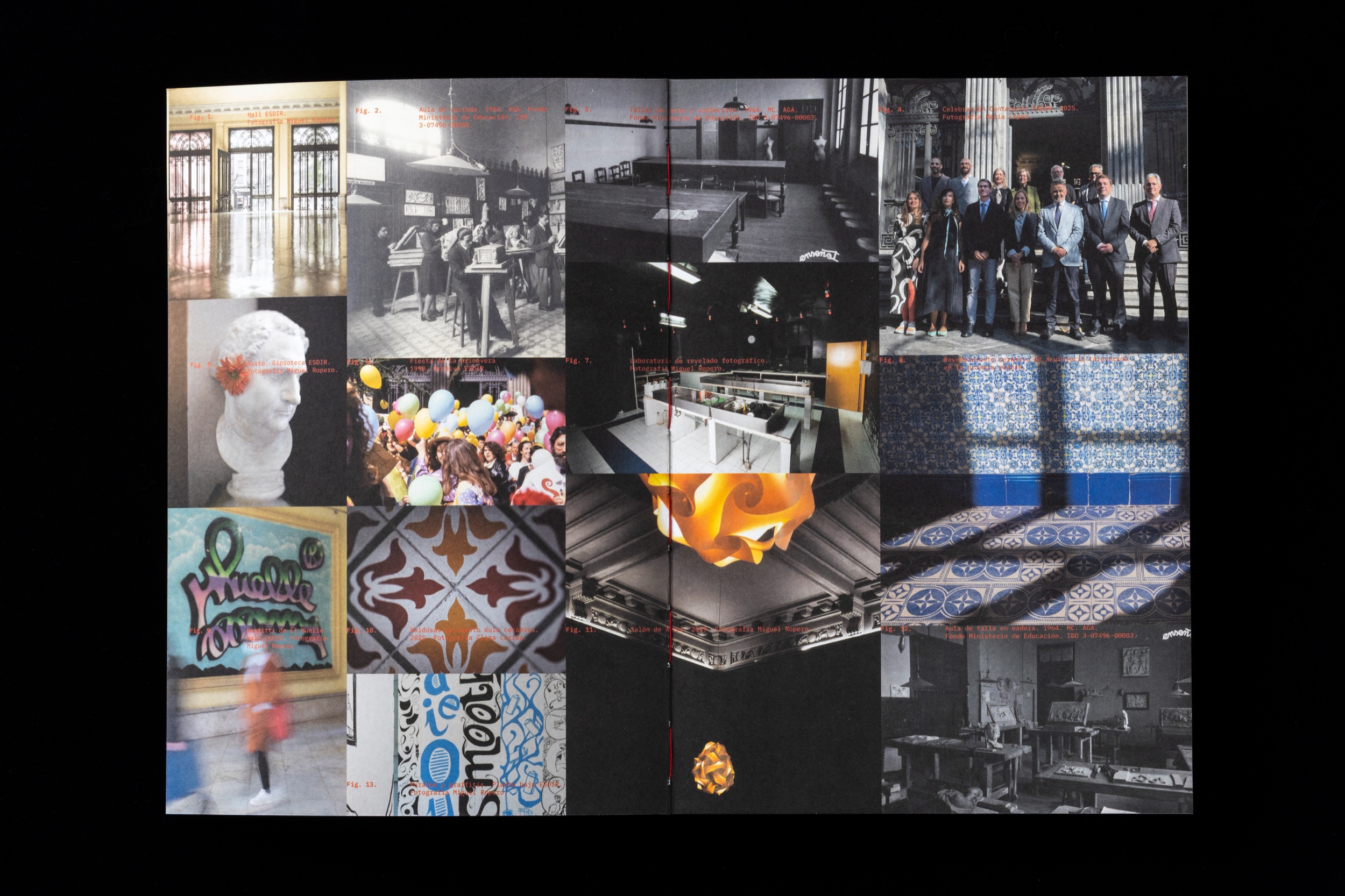
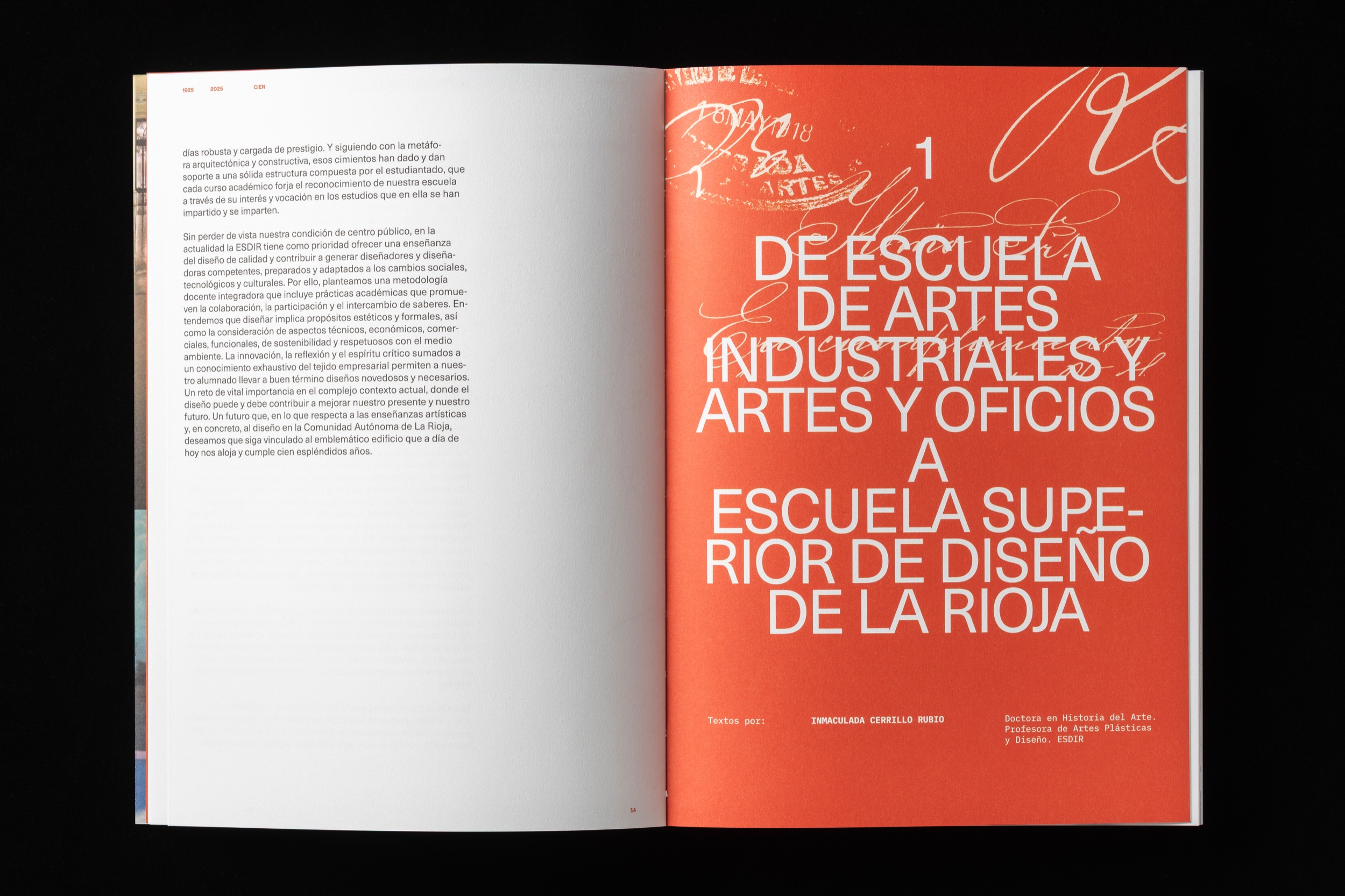
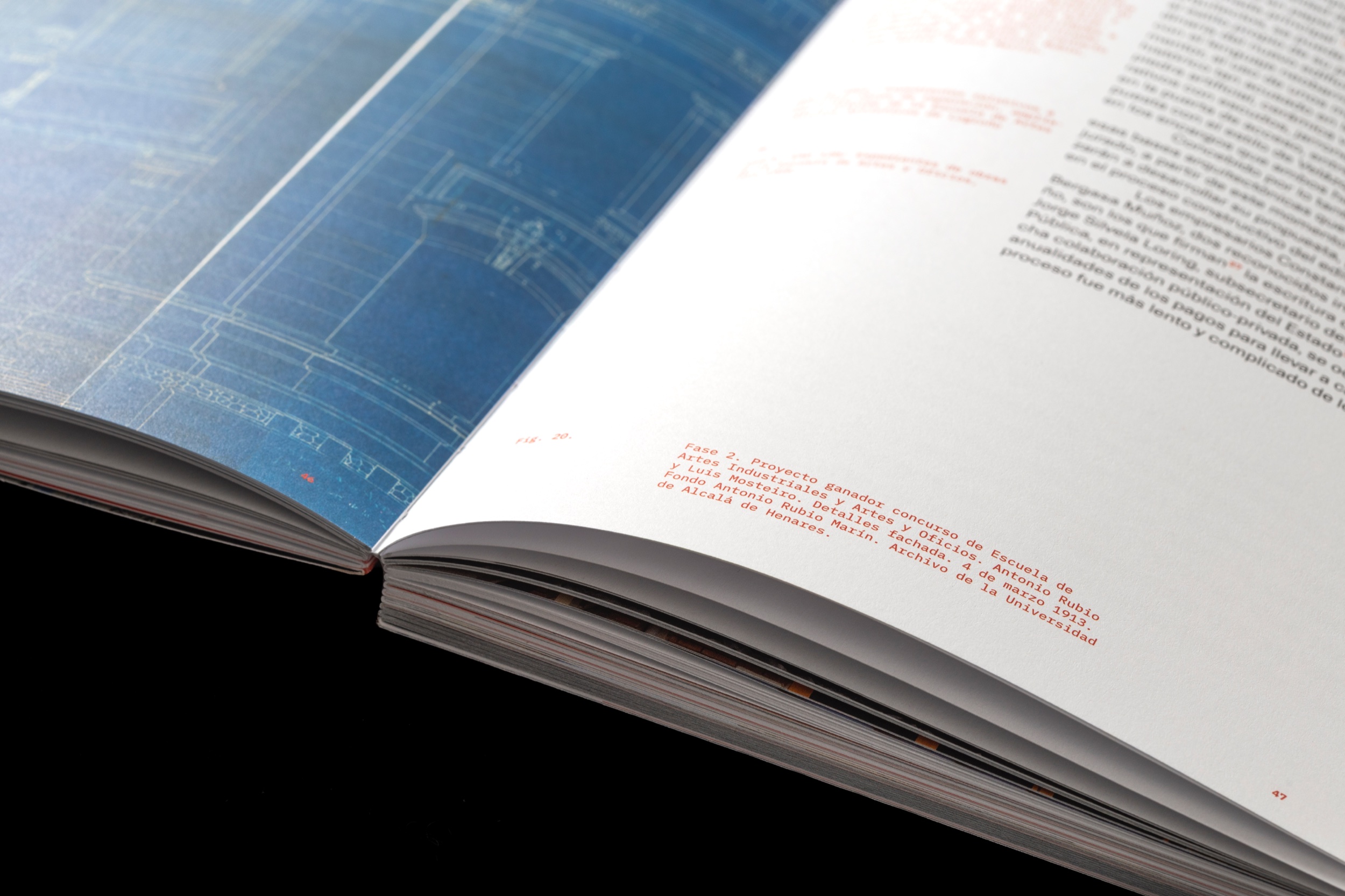
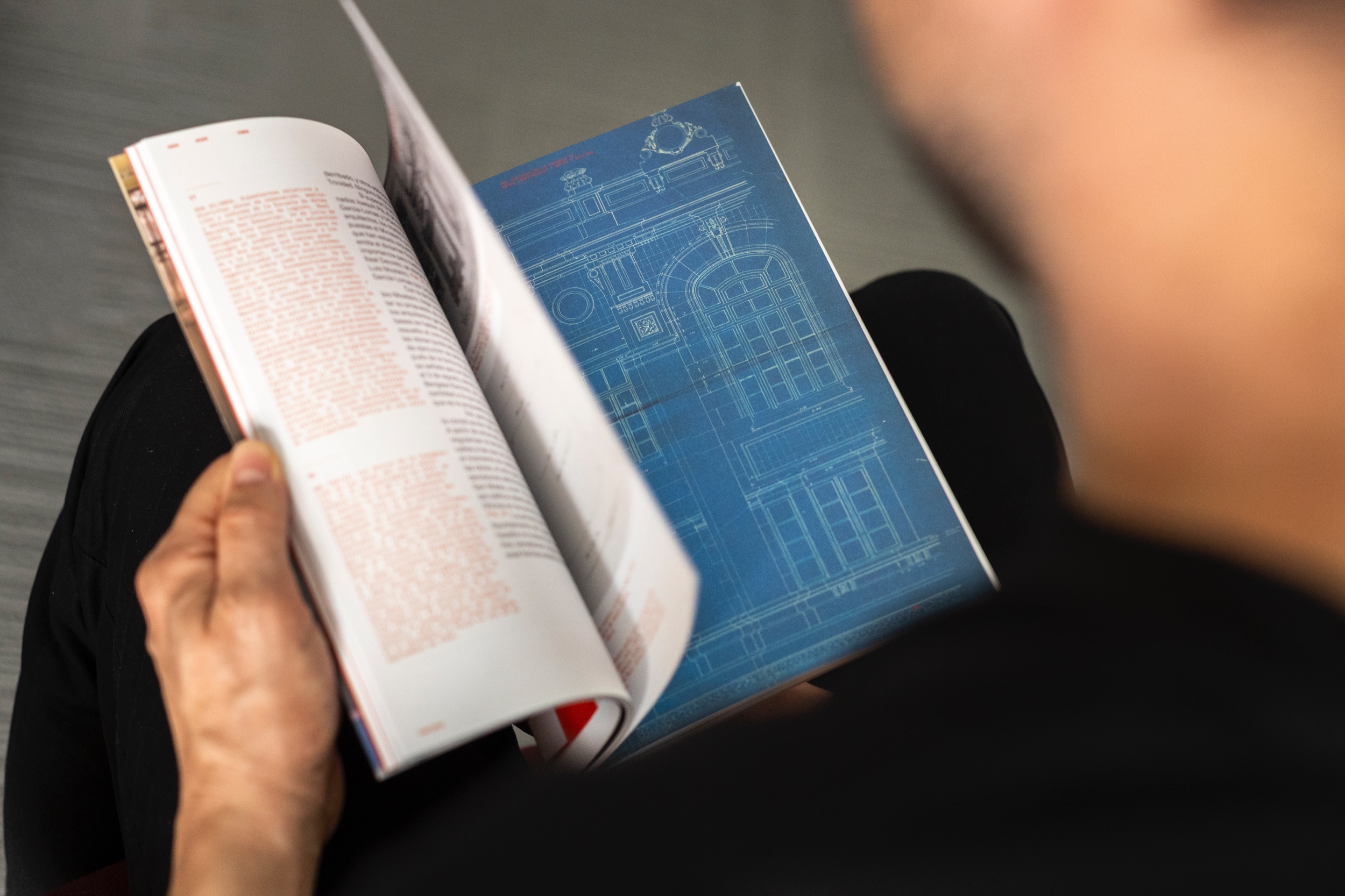
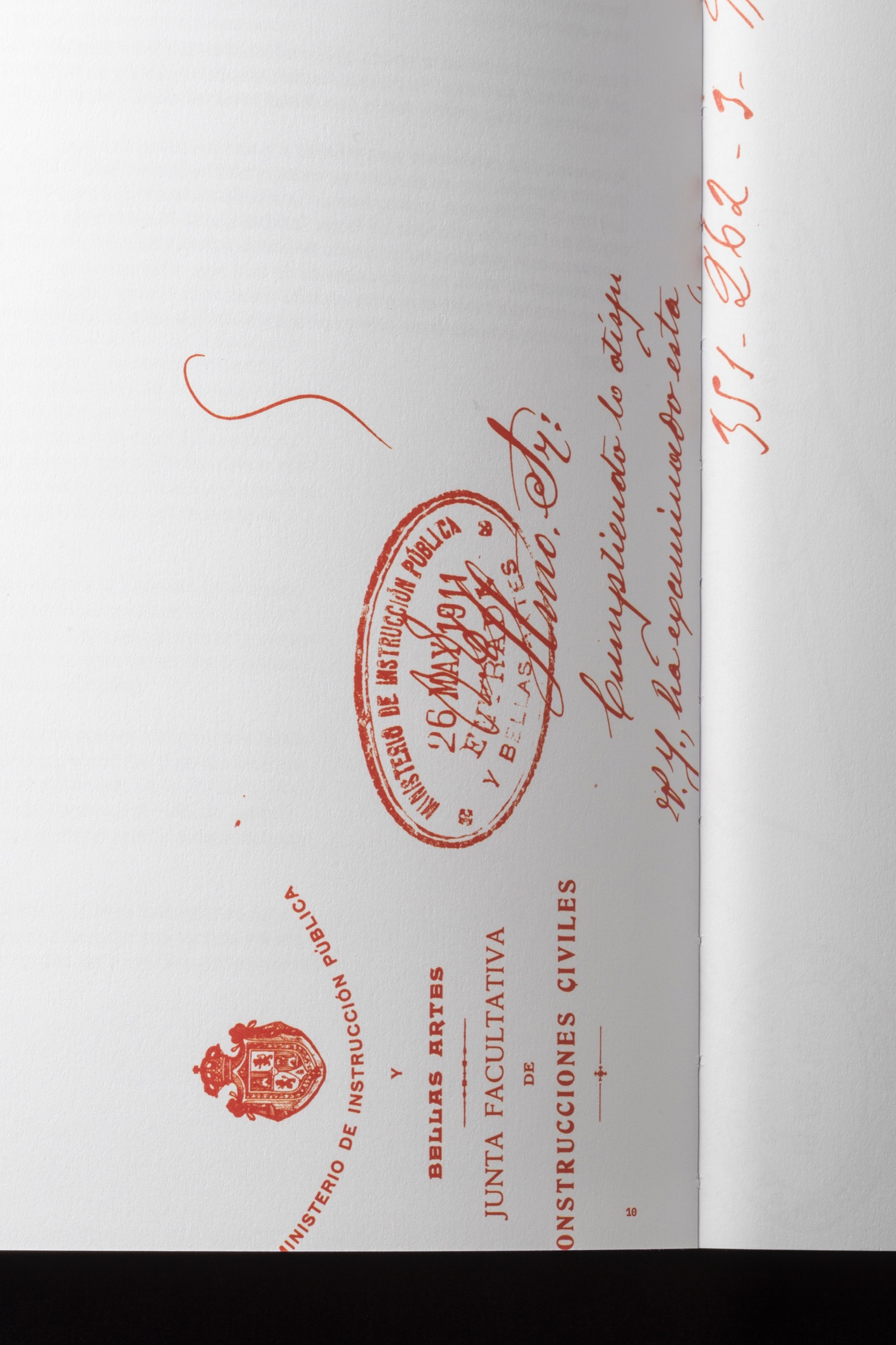
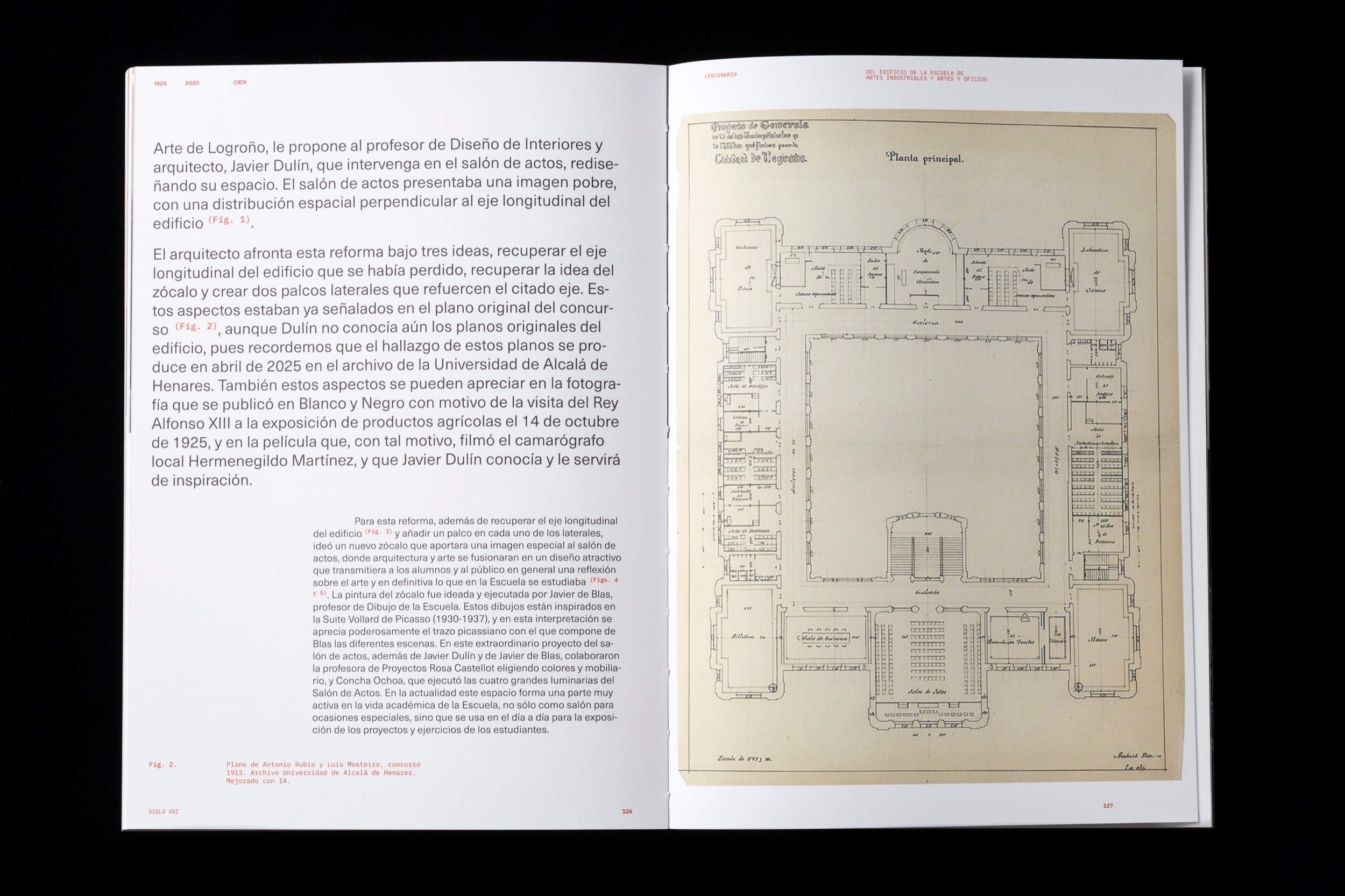
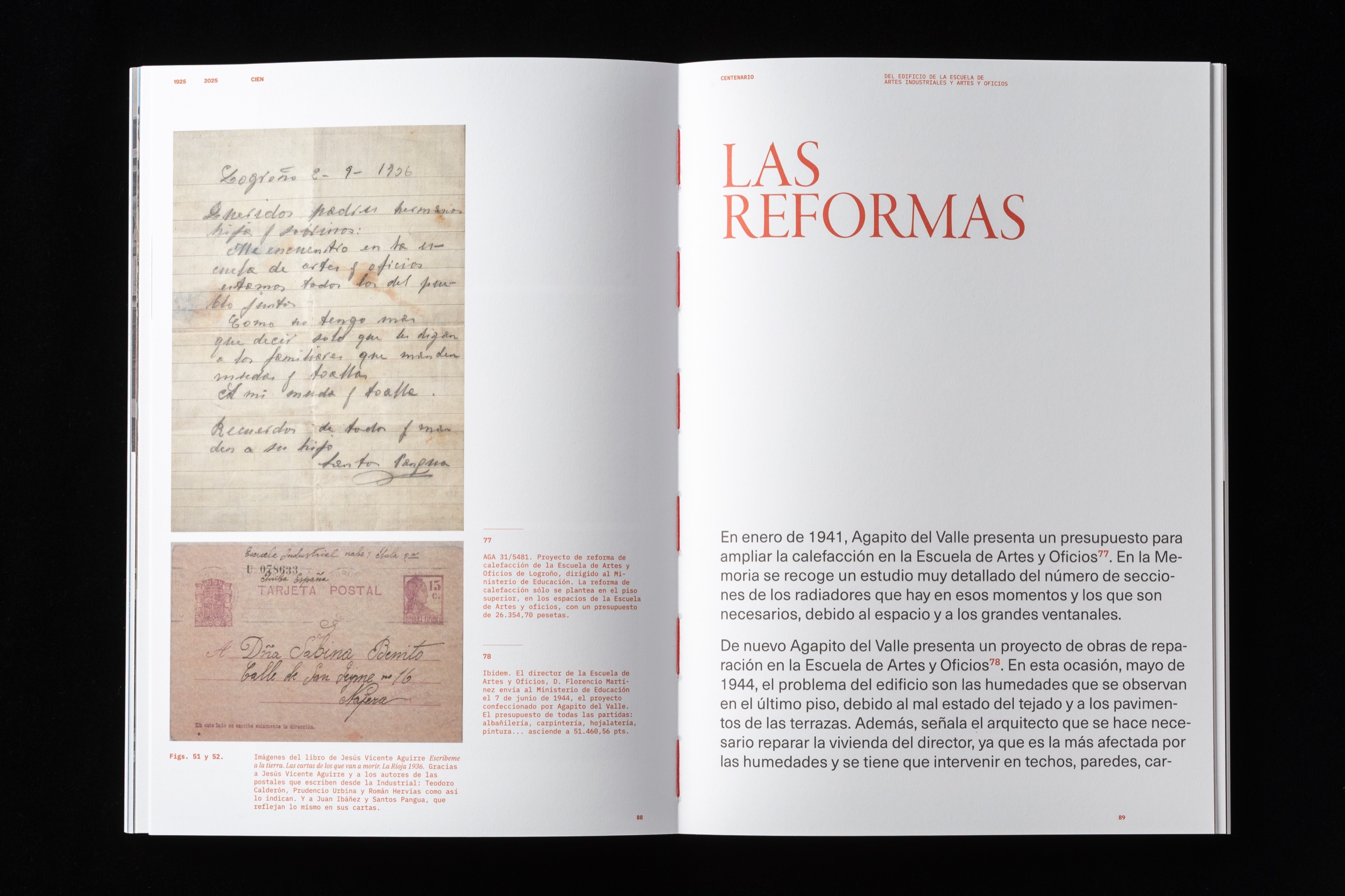
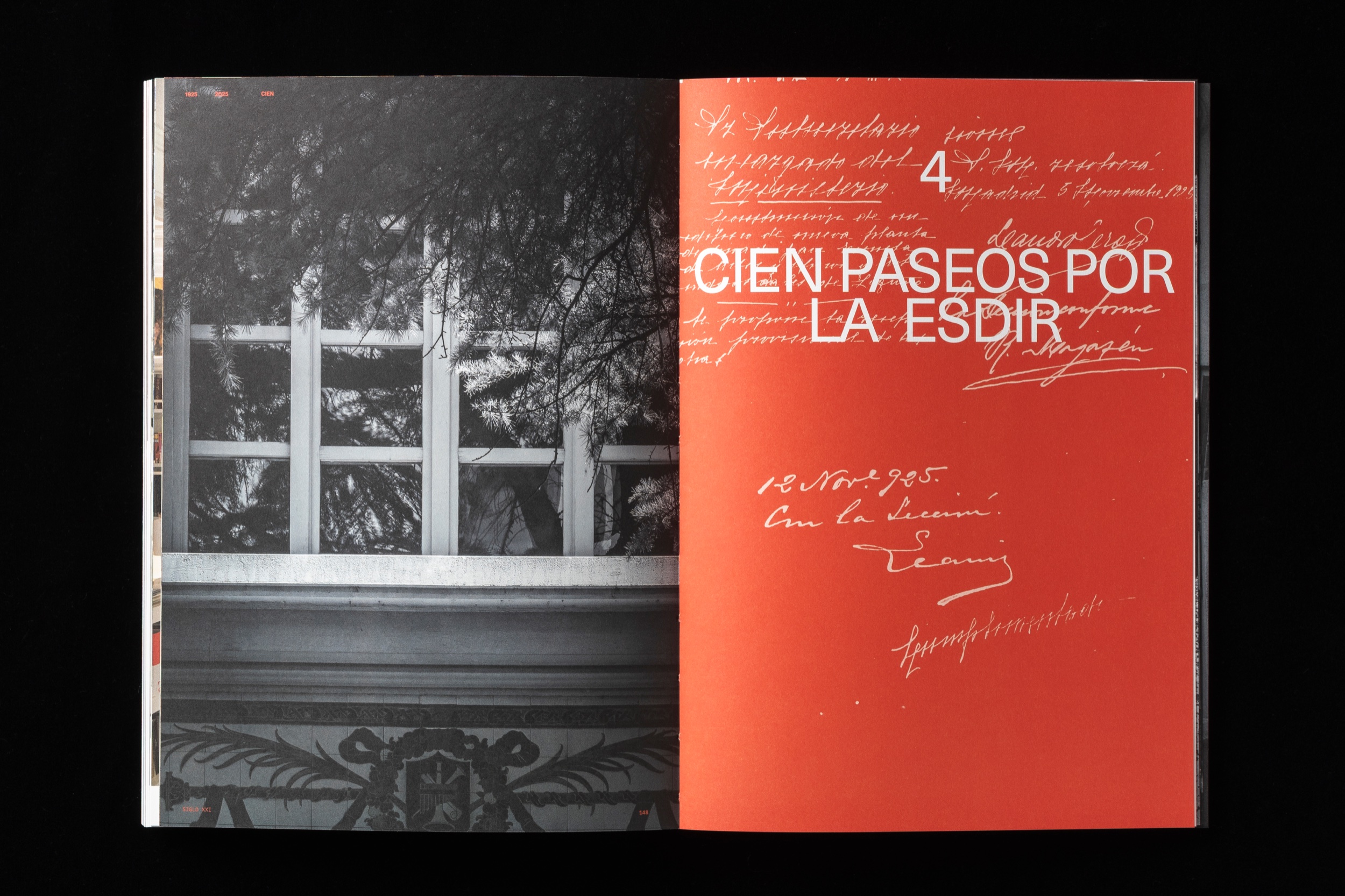
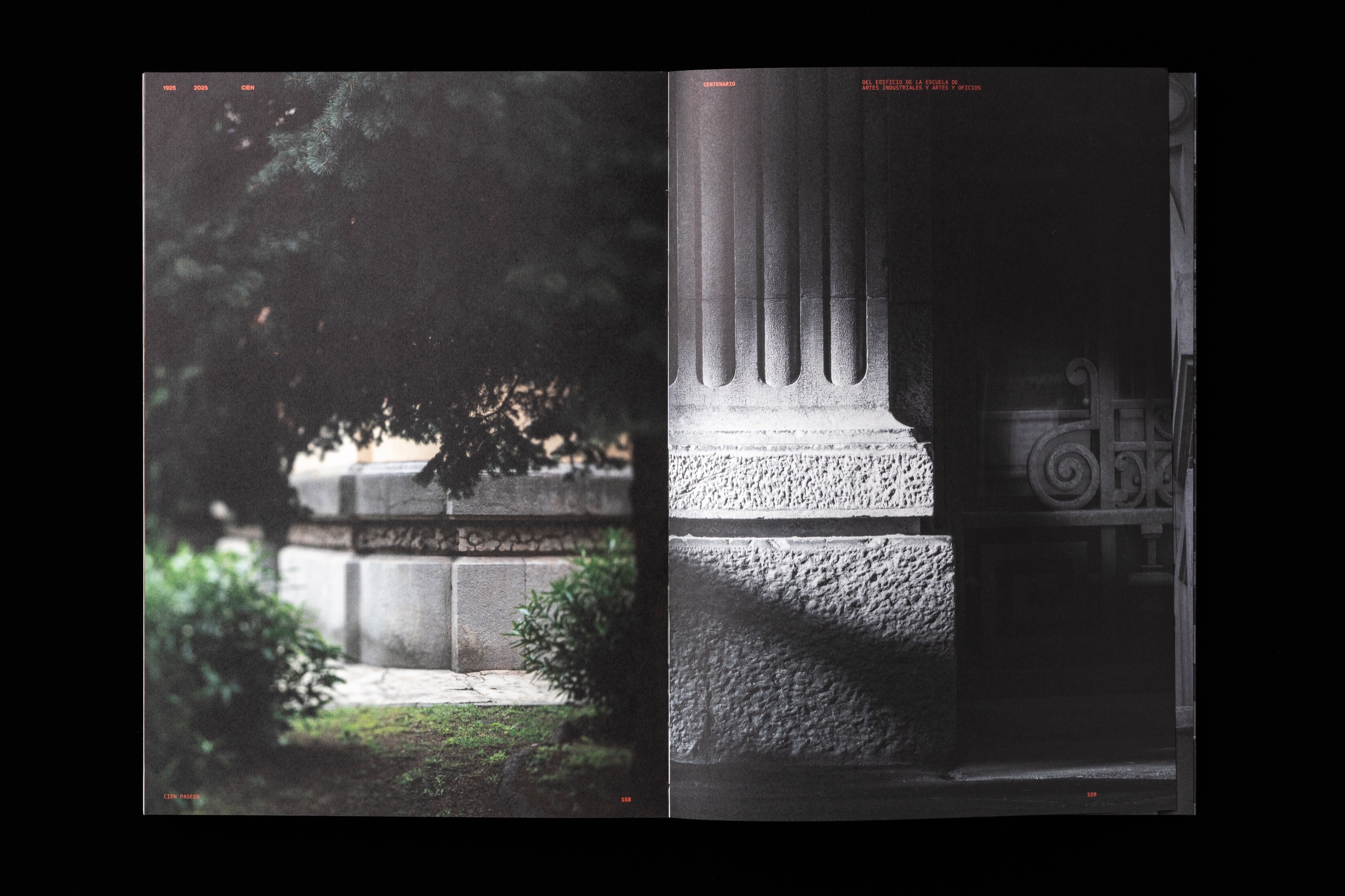
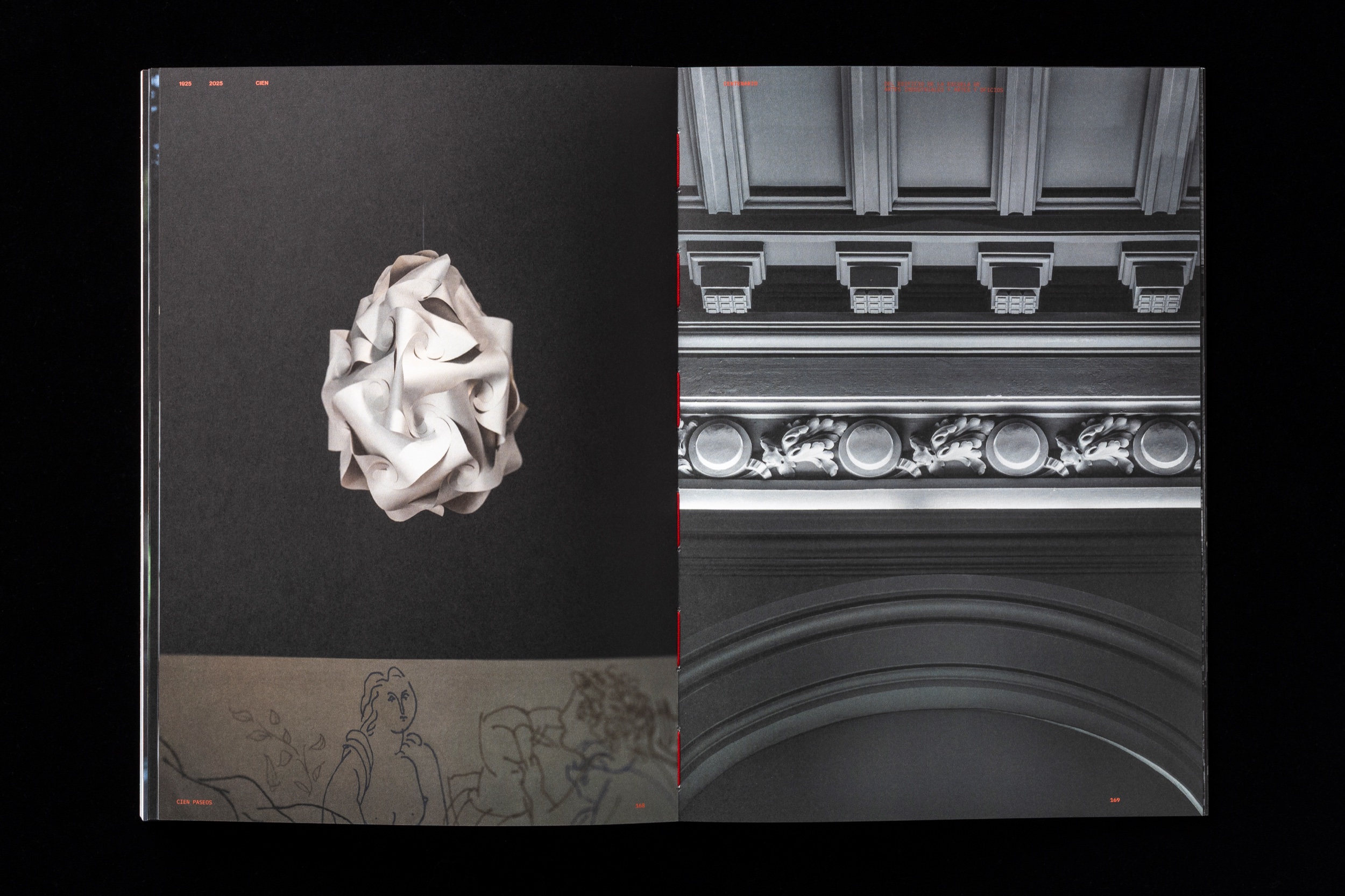
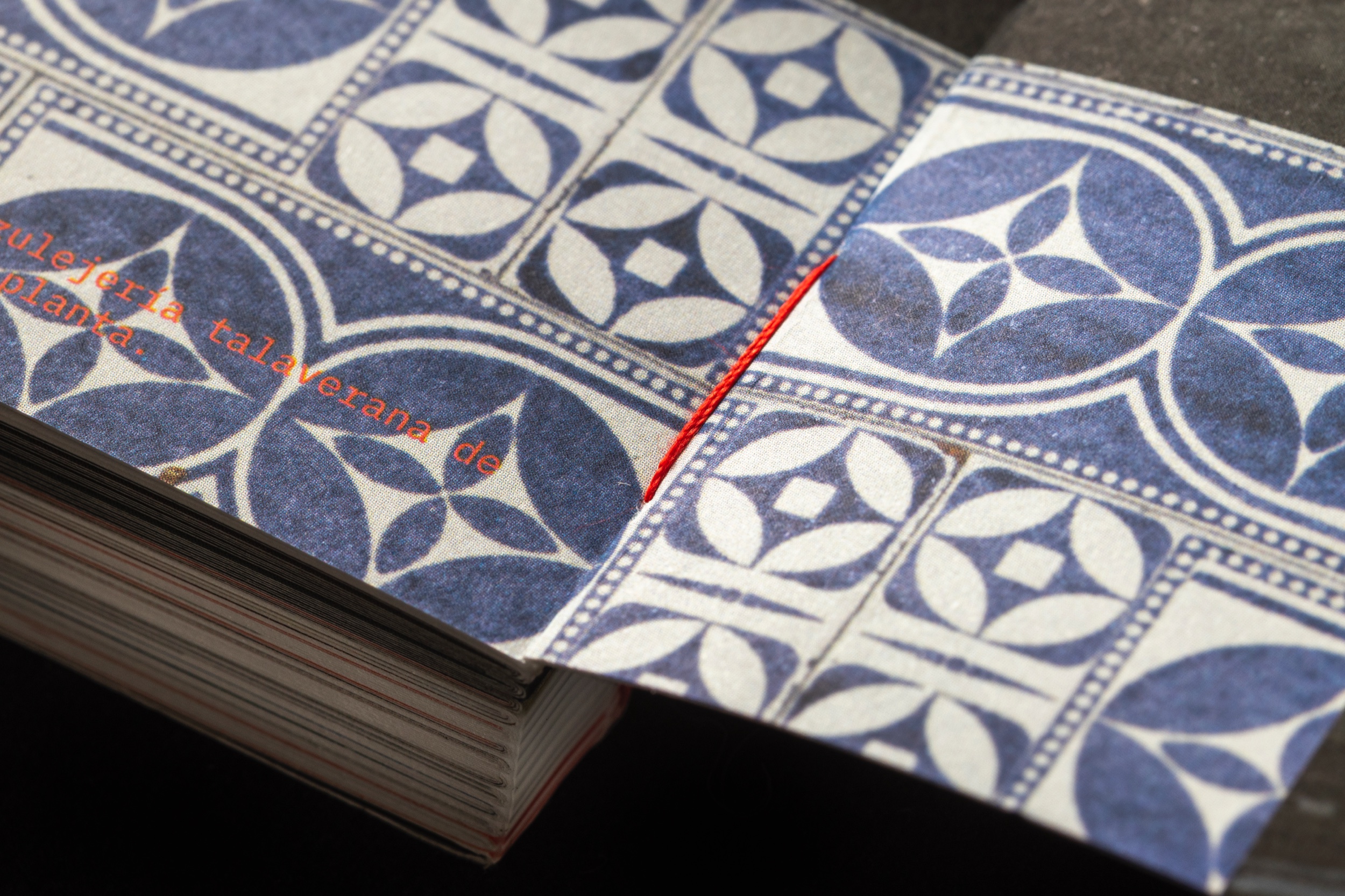
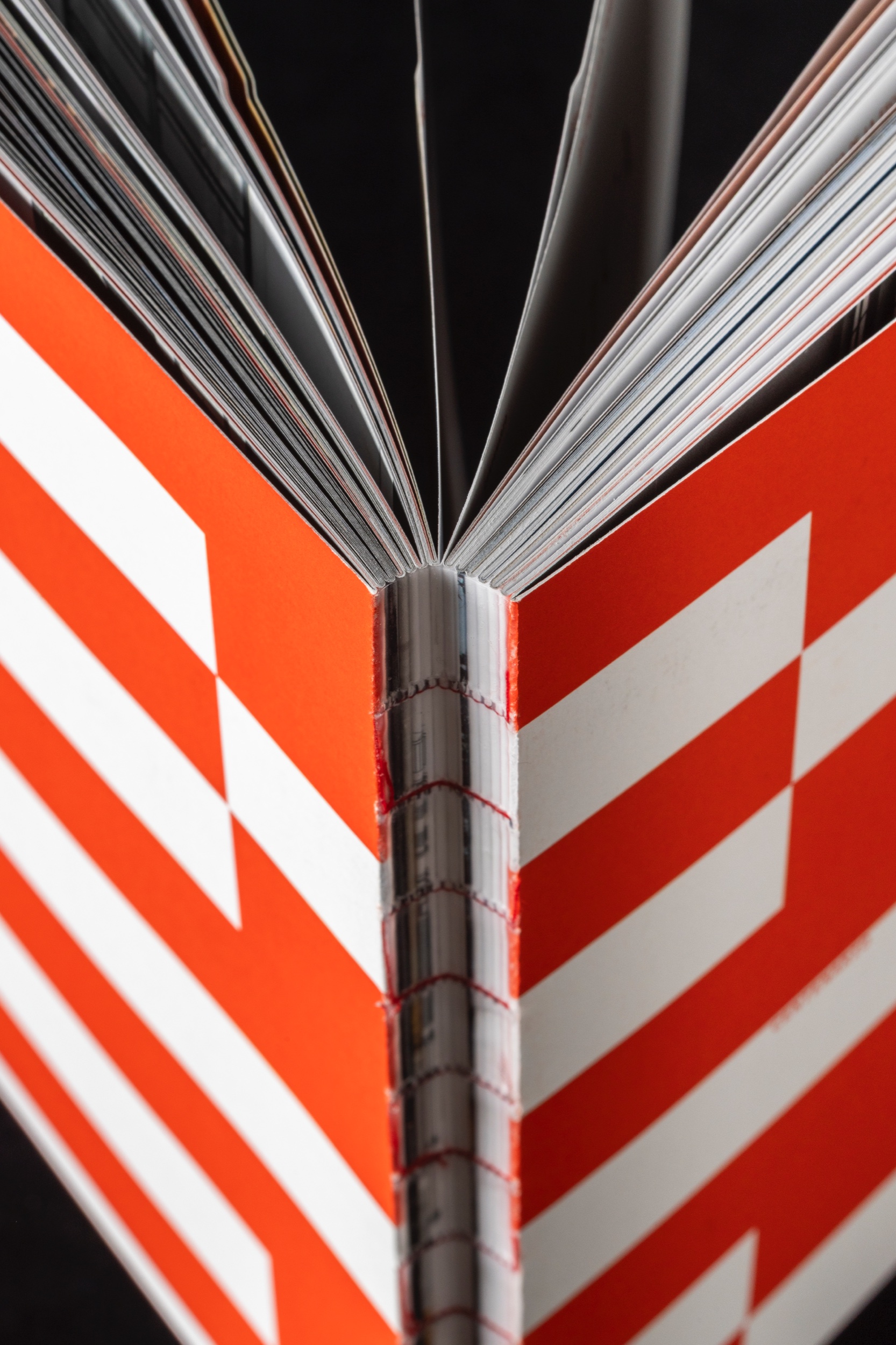
CIEN is a publication created to celebrate the one hundred years of history of the building that houses the Escuela Superior de Diseño de La Rioja, inaugurated as the School of Industrial Arts and Arts and Crafts of Logroño. The project stems from extensive documentary research, almost archaeological, that brings together administrative files, documents linked to the construction and bidding of the building, plans, photographs, typewritten and handwritten texts, and other materials that allow the reconstruction of the school’s evolution from its origins to the present day.
The design stems from that same documentary logic and proposes the book as a palimpsest, an accumulation of layers in which traces from the early twentieth century coexist with a current visual language. The intention was not to use the historical archive as a decorative element, but to construct a system in which the design continuously dialogued with it, in the same way that different eras, uses, and transformations are superimposed on the walls of the building itself.
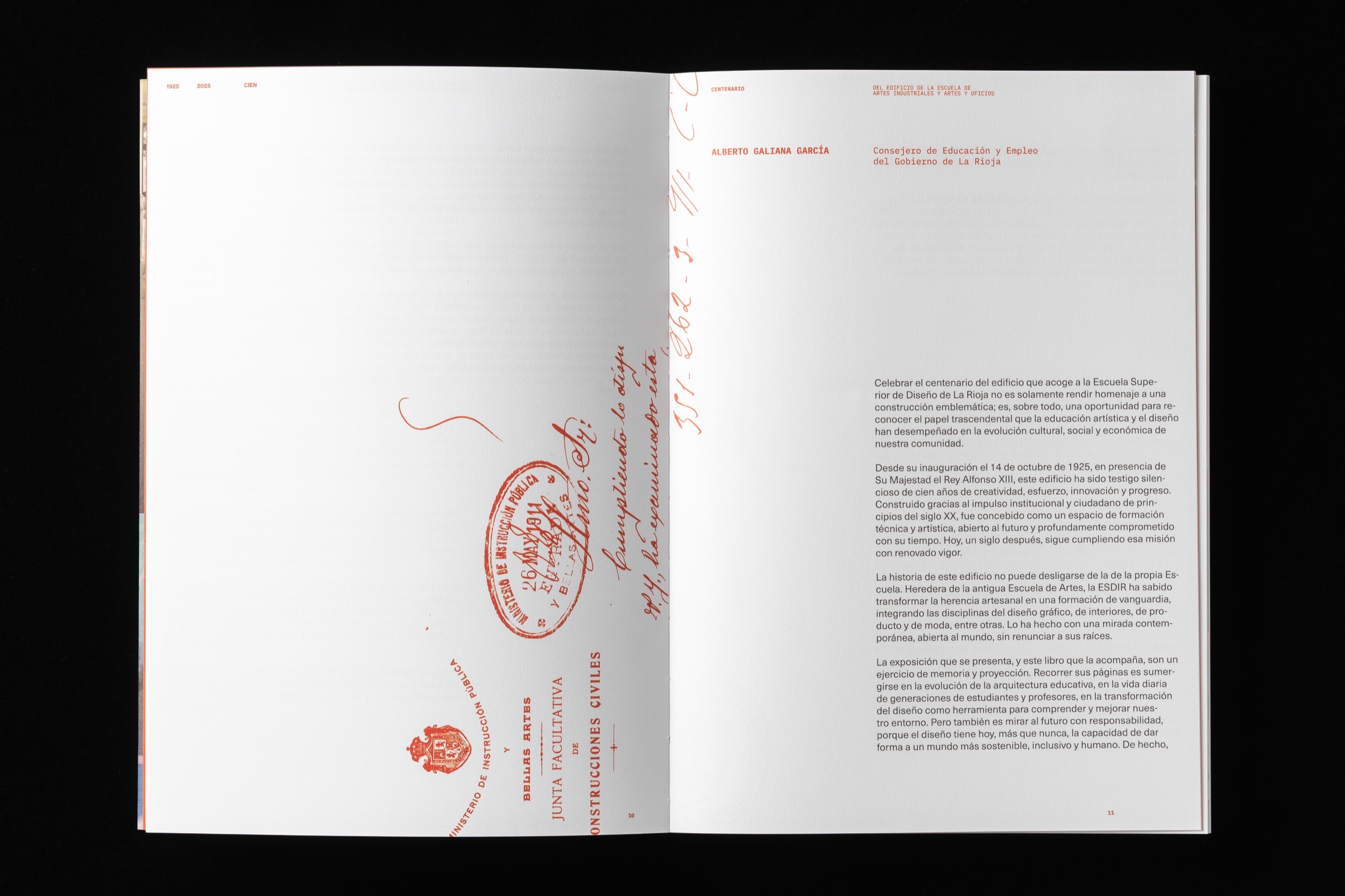
The page structure takes as its reference some of the original handwritten documents penned in ink, in which the content occupied only the right-hand side of the page to avoid the overlapping of lines between recto and verso. That space is incorporated into the current layout to house notes, references, images, and supplementary materials. Stamps, signatures, calligraphies, annotations, and other marks extracted from the archive appear as fragments of memory that traverse the publication and connect the different moments of its history.
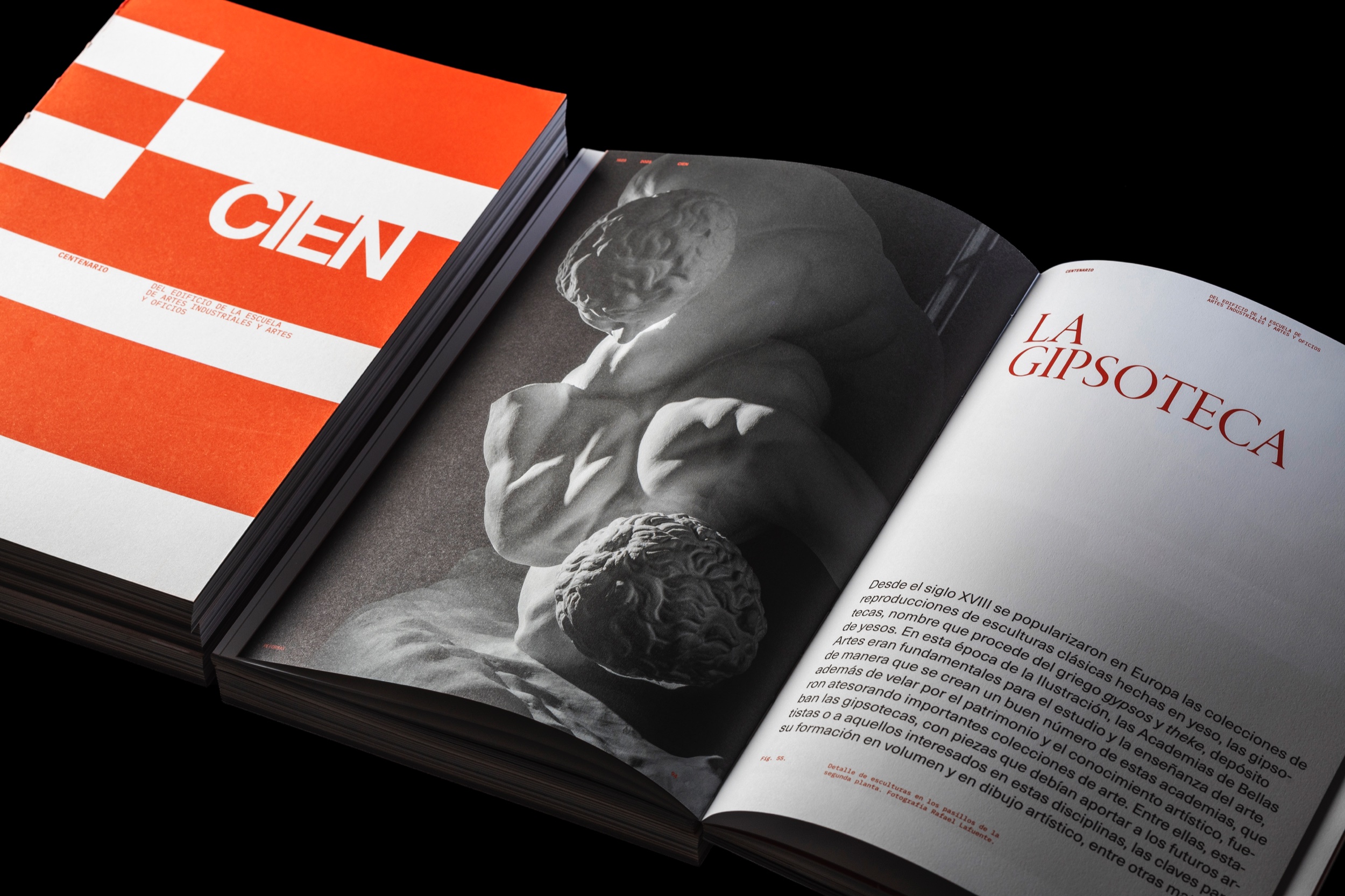
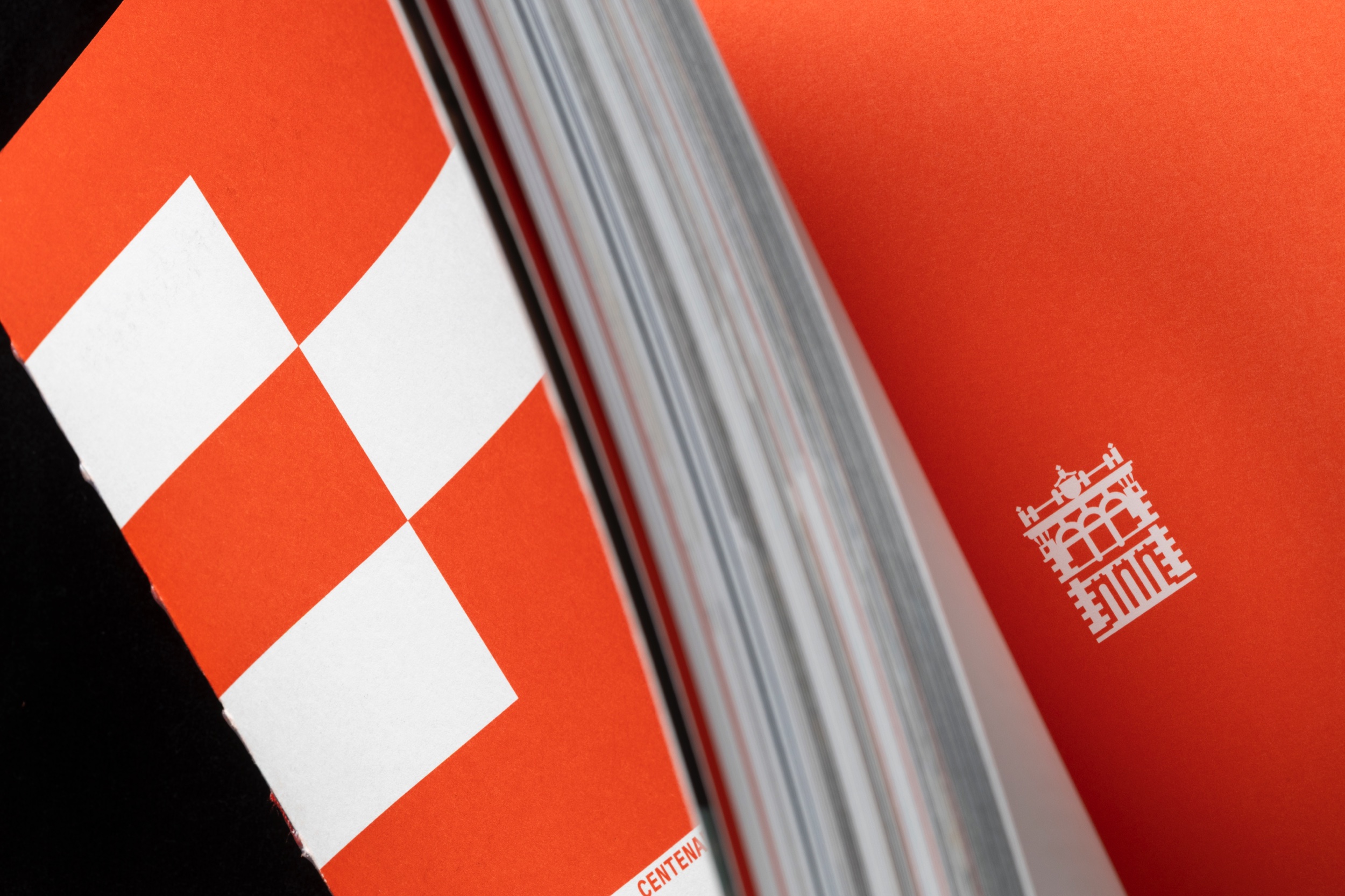
To this documentary dimension is added a graphic language constructed from some of the most recognizable material elements of the architecture itself. The red brick and stone of the building are translated into an elemental binary code, which articulates the contemporary visual system of the book and establishes a link between architecture, identity, and publication. The result seeks to accompany a very extensive historical archive without neutralizing its character: a clear and legible book, but also one capable of preserving part of the traces and texture that reveal those one hundred years of history.
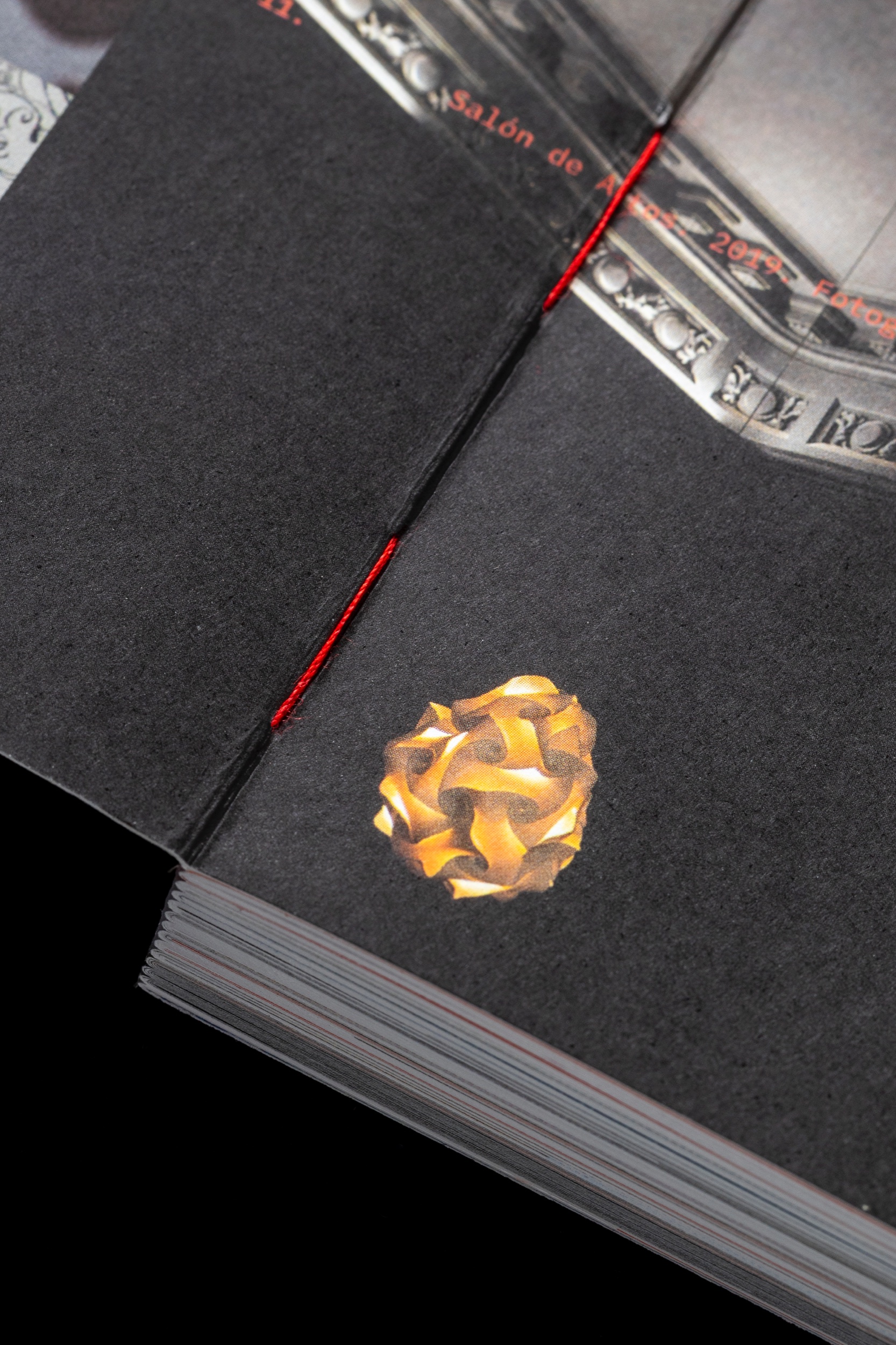
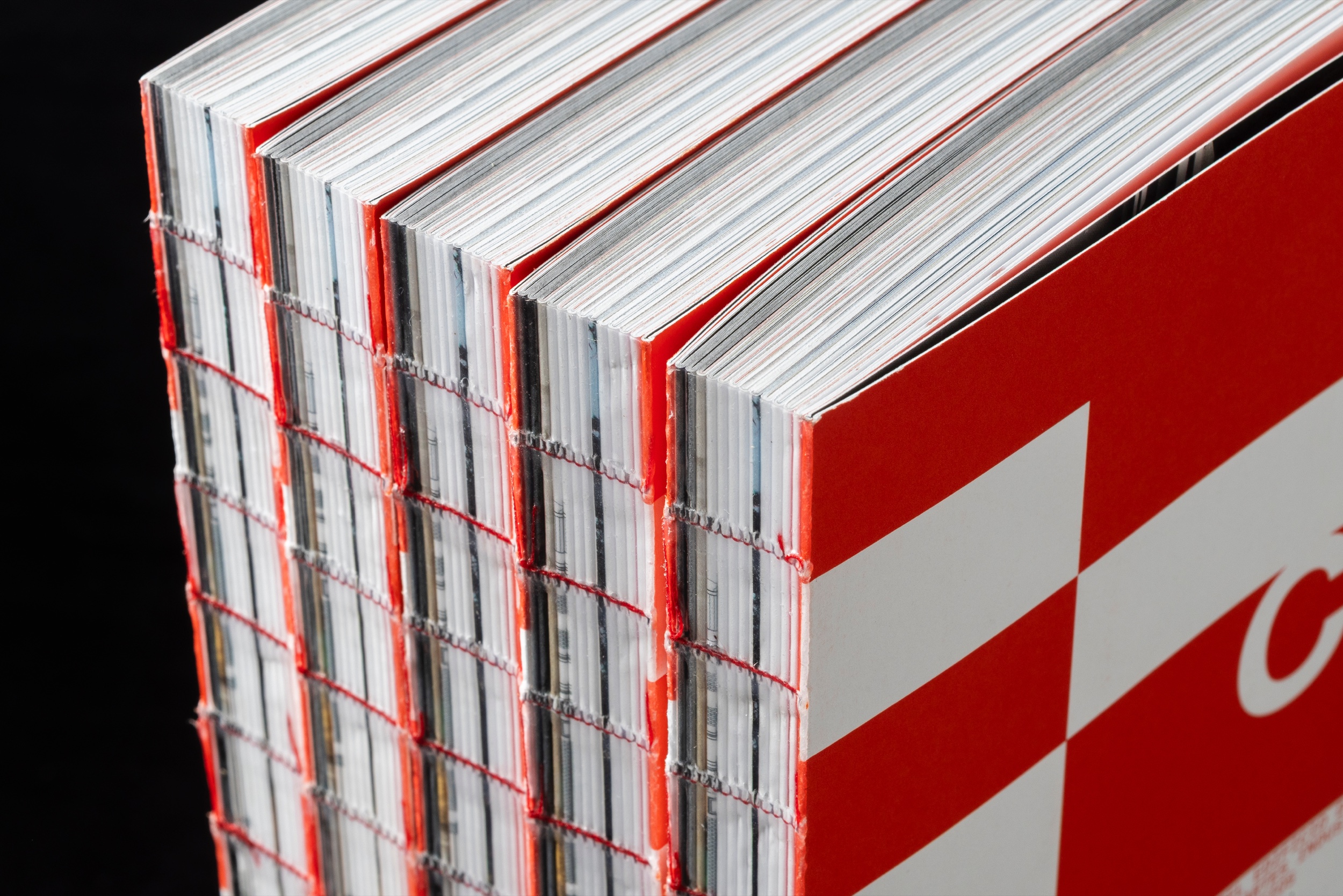
The publication comprises 192 pages, with interior and cover printed on Munken Lynx (130 g for the interior and 300 g for the cover diptychs) and binding with exposed spine. The combination of historical documentation, contemporary photography, and different typographic registers makes the book function simultaneously as research, archive, and current portrait of the school.